
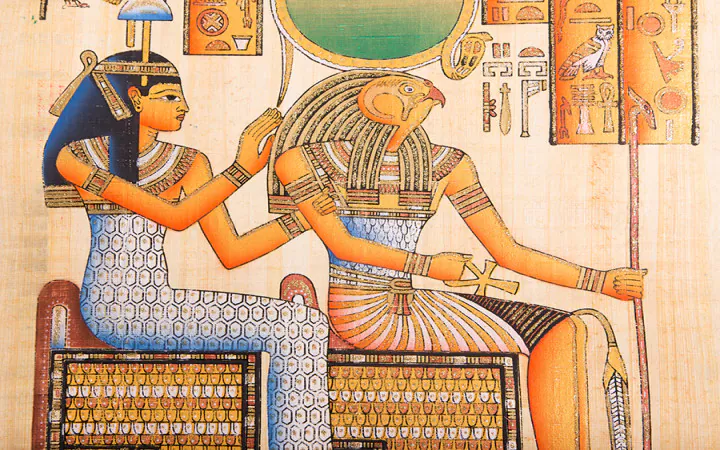
Cleopatra: The Last Queen of Egypt – 10 Powerful Facts
Cleopatra: The Last Queen of Egypt – 10 Fascinating Facts
Who Was Cleopatra?
Cleopatra was the last active ruler of the Ptolemaic Kingdom of Egypt and one of the most famous women in ancient history. Known officially as Cleopatra VII Philopator, she ruled Egypt during a turbulent period when the Mediterranean world was dominated by the growing power of Rome.
Born in 69 BC, Cleopatra became queen during her late teenage years. She inherited a kingdom facing political challenges, economic difficulties, and increasing Roman influence. Through intelligence, diplomacy, political ambition, and personal alliances, she managed to maintain Egypt’s independence for much of her reign.
Unlike the popular image that often focuses only on her beauty and romantic relationships, Cleopatra was a highly educated and politically capable monarch. She understood the importance of diplomacy and was deeply involved in the administration of her kingdom.
Her story connects Ancient Egypt with some of the most important figures of the Roman world, including Julius Caesar and Mark Antony.
1. Cleopatra Was a Member of the Ptolemaic Dynasty
Cleopatra belonged to the Ptolemaic Dynasty, which ruled Egypt for almost three centuries after the death of Alexander the Great.
The dynasty was founded by Ptolemy I Soter, one of Alexander’s generals.
Although the Ptolemaic rulers governed Egypt, they were of Macedonian Greek origin. Over generations, the royal family adopted many Egyptian traditions and presented themselves as legitimate pharaohs.
Cleopatra therefore represented the final chapter of a dynasty that connected Greek and Egyptian cultures.
2. Cleopatra Was Highly Educated
One of the most interesting facts about Cleopatra is her reputation for intelligence and education.
She was reportedly knowledgeable about politics, philosophy, science, literature, and diplomacy.
Ancient sources also emphasize her ability to communicate with people from different regions.
Unlike several earlier Ptolemaic rulers, Cleopatra is traditionally said to have learned the Egyptian language.
This ability would have helped her connect with Egyptian priests and subjects and strengthen her image as an Egyptian ruler.
Her education was not simply a personal achievement. Knowledge was an important political tool for a monarch who needed to negotiate with powerful foreign leaders.
3. She Became Queen at a Young Age
Cleopatra became co-ruler of Egypt with her younger brother Ptolemy XIII after the death of their father, Ptolemy XII.
As was customary in the Ptolemaic royal family, the siblings were formally married and ruled together.
However, the arrangement quickly became politically unstable.
Powerful advisers around Ptolemy XIII eventually pushed Cleopatra out of Alexandria.
Instead of accepting defeat, she began organizing her return to power.
Her political struggle with her brother eventually became connected to the arrival of Julius Caesar in Egypt.
4. Cleopatra Met Julius Caesar in Alexandria
Cleopatra’s relationship with Julius Caesar became one of the most famous political alliances in ancient history.
When Caesar arrived in Alexandria during the Roman civil war, Cleopatra sought his support in her struggle against Ptolemy XIII.
Ancient accounts describe the dramatic circumstances surrounding their first meeting.
Caesar eventually supported Cleopatra’s claim to the Egyptian throne.
Following the defeat and death of Ptolemy XIII, Cleopatra regained her position as ruler.
Their relationship also became personal, and Cleopatra later had a son named Caesarion, whom she claimed was Caesar’s child.
5. Cleopatra and Caesarion
Caesarion, formally named Ptolemy XV Caesar, was Cleopatra’s son.
He became co-ruler with his mother while still a child.
Cleopatra promoted Caesarion as the legitimate heir of Egypt and emphasized his connection with Julius Caesar.
His existence became politically significant after Caesar’s assassination.
In the struggle for power that followed, Octavian, the future Emperor Augustus, challenged the position of Caesarion and Cleopatra.
The political future of Egypt became increasingly connected to the outcome of Rome’s internal conflicts.
6. Cleopatra Allied With Mark Antony
After Julius Caesar’s assassination in 44 BC, Rome entered another period of political conflict.
Mark Antony became one of the most powerful figures in the Roman world.
Cleopatra and Antony formed both a personal relationship and a major political alliance.
Antony needed Egyptian resources and wealth, while Cleopatra wanted to protect Egypt’s independence and strengthen her position.
Their alliance allowed Cleopatra to regain territories and increase her political influence.
Together, they became one of the most famous couples of the ancient Mediterranean world.
7. Cleopatra Was a Powerful Political Leader
Popular culture often presents Cleopatra primarily as a romantic figure.
However, her political achievements deserve much greater attention.
She successfully navigated a dangerous political environment involving Roman generals, Egyptian elites, rival royal family members, and neighboring kingdoms.
She maintained Egypt as a significant independent power for much of her reign.
Her government also depended heavily on the wealth generated by the Nile Valley.
Egypt’s agricultural resources made the kingdom economically important to Rome.
Cleopatra understood this economic strength and used it as a political advantage.
8. The Battle of Actium Changed Her Fate
The turning point came with the Battle of Actium in 31 BC.
Cleopatra and Mark Antony faced the forces of Octavian in a major naval confrontation off the western coast of Greece.
Octavian’s forces won the battle.
Cleopatra and Antony retreated to Egypt.
The following year, Octavian invaded Egypt and entered Alexandria.
With their political position collapsing, Antony and Cleopatra faced the end of their rule.
The defeat at Actium effectively ended Egypt’s ability to remain an independent Mediterranean kingdom.
9. How Did Cleopatra Die?
The death of Cleopatra remains one of the most famous stories from antiquity.
After Octavian captured Alexandria, Mark Antony died by suicide.
Cleopatra also died shortly afterward in 30 BC.
Ancient writers associated her death with the bite of an asp, a venomous snake, but the exact circumstances remain uncertain.
Some historians have suggested that she may have used poison instead.
The precise method of her death cannot be established with complete certainty.
What is clear is that her death marked the end of Ptolemaic rule in Egypt.
10. Cleopatra Was Egypt’s Last Active Pharaoh
After Cleopatra’s death, Egypt became a Roman province.
Her son Caesarion was killed on Octavian’s orders, ending the remaining Ptolemaic royal line.
Egypt’s transformation into a Roman province was one of the most significant political changes in its ancient history.
This is why Cleopatra is often described as the last queen of Egypt.
Although later Roman rulers also adopted aspects of Egyptian kingship and were depicted in Egyptian temples, Cleopatra remains the final ruler of the Ptolemaic dynasty and the last active monarch of the independent Ptolemaic kingdom.
Cleopatra and Ancient Alexandria
Alexandria played a central role in Cleopatra’s life.
Founded by Alexander the Great, the city became one of the most important centers of learning, trade, and culture in the ancient Mediterranean.
Cleopatra ruled from Alexandria and used the city as the political heart of her kingdom.
The city’s multicultural population included Egyptians, Greeks, Jews, Romans, and other communities.
For modern travelers, Alexandria offers an opportunity to explore the later history of Ancient Egypt and understand the world in which Cleopatra lived.
Was Cleopatra Actually Egyptian?
The answer is more complicated than it first appears.
Cleopatra was a member of the Macedonian Greek Ptolemaic Dynasty.
However, she ruled Egypt and adopted many Egyptian traditions.
She presented herself as an Egyptian pharaoh and associated herself with Egyptian deities.
Her political identity therefore combined Greek, Macedonian, and Egyptian traditions.
This cultural mixture was characteristic of Ptolemaic Egypt.
What Did Cleopatra Look Like?
There is no reliable portrait that gives us a complete understanding of Cleopatra’s actual appearance.
Coins issued during her reign provide some of the most useful contemporary representations.
These portraits show a strong facial profile and royal features.
Ancient writers focused on her charisma, intelligence, voice, and personality rather than simply describing her as extraordinarily beautiful.
Her historical influence appears to have depended greatly on her intelligence, communication skills, confidence, and political abilities.
Where Is Cleopatra’s Tomb?
The location of Cleopatra’s final tomb remains unknown.
Ancient sources indicate that she and Mark Antony were buried together, but archaeologists have not definitively identified the burial site.
Some researchers have investigated areas near Alexandria, including the temple complex at Taposiris Magna, as a possible location.
However, no confirmed discovery has established Cleopatra’s tomb.
The mystery continues to attract archaeologists and historians.
Cleopatra’s Legacy
The legacy of Cleopatra extends far beyond the political events of her lifetime.
She has appeared in countless books, films, paintings, plays, documentaries, and works of art.
Her story has also shaped the popular image of ancient queens.
However, historical evidence presents a much more complex figure.
She was a monarch, diplomat, administrator, political strategist, mother, and cultural figure who ruled during one of the most dangerous periods in Mediterranean history.
Her ability to maintain Egyptian independence for much of her reign was a remarkable achievement.
Why Cleopatra Remains One of History’s Most Famous Queens
Several elements make Cleopatra’s story particularly fascinating.
She lived during the transition between the Hellenistic and Roman worlds.
interacted with Julius Caesar and Mark Antony.
She ruled one of the wealthiest kingdoms in the Mediterranean.
She became involved in Roman civil wars.
Her defeat resulted in Egypt becoming part of the Roman Empire.
Finally, her mysterious death created a dramatic ending to one of antiquity’s most remarkable political careers.
For visitors exploring Egypt’s historical sites, Cleopatra provides a fascinating bridge between Ancient Egyptian traditions, Greek culture, and Roman power.
Frequently Asked Questions
Who was Cleopatra?
Cleopatra VII Philopator was the last active ruler of the Ptolemaic Kingdom of Egypt. She ruled from 51 BC until her death in 30 BC.
Was Cleopatra Egyptian?
Cleopatra was descended from the Macedonian Greek Ptolemaic Dynasty. However, she ruled Egypt as a pharaoh and adopted many Egyptian religious and cultural traditions.
Who was Cleopatra married to?
Cleopatra was formally married to her younger brothers Ptolemy XIII and Ptolemy XIV according to Ptolemaic royal tradition. She also had famous relationships with Julius Caesar and Mark Antony.
Did Cleopatra have children?
Yes. She had a son, Caesarion, with Julius Caesar and children with Mark Antony.
How did Cleopatra die?
The exact method remains uncertain. Ancient accounts associate her death with a poisonous snake, while other theories suggest another form of poisoning.
Where is Cleopatra buried?
Her confirmed burial location has never been discovered.
Why is Cleopatra famous?
She is famous for ruling Egypt during its final independent period, her political relationships with Julius Caesar and Mark Antony, and her role in the transition from Ptolemaic Egypt to Roman Egypt.